

Advanced Minimally Invasive Hernia Treatment
Laparoscopic Hernia Surgery is a modern, minimally invasive procedure used to repair hernias with smaller incisions, less pain, and faster recovery compared to traditional open surgery. This advanced technique allows surgeons to repair the weakened area of the abdominal wall using specialized instruments and a high-definition camera for enhanced precision.
What is a Hernia?
A hernia occurs when an internal organ or tissue pushes through a weak spot in the surrounding muscle or connective tissue. Hernias commonly develop in the abdomen and groin and may cause pain, discomfort, or a visible bulge.
Types of Hernias Treated
- Inguinal Hernia
- Femoral Hernia
- Umbilical Hernia
- Incisional Hernia
- Ventral Hernia
- Recurrent Hernia
Benefits of Laparoscopic Hernia Surgery
- Smaller incisions and minimal scarring
- Less postoperative pain
- Reduced risk of wound infection
- Shorter hospital stay
- Faster recovery and return to normal activities
- Better cosmetic outcomes
- Lower recurrence rates in selected cases
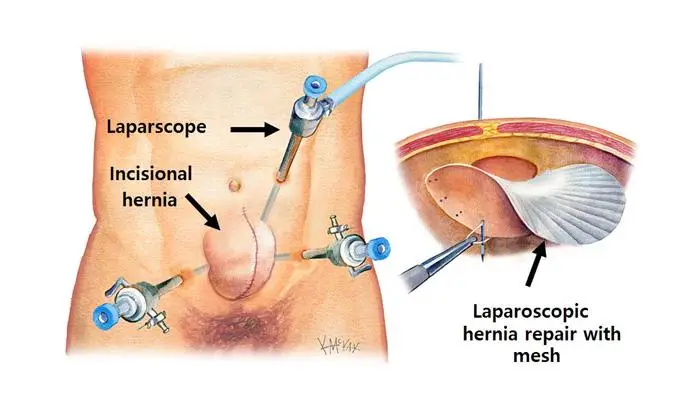
How is the Procedure Performed?
During the procedure, the surgeon makes a few small incisions in the abdomen. A laparoscope (a thin tube with a camera) is inserted to provide a clear view of the hernia. The protruding tissue is repositioned, and the weakened area is reinforced using a surgical mesh for long-term support.
Who is a Candidate?
- Patients with inguinal, ventral, or recurrent hernias
- Individuals seeking a minimally invasive approach
- Patients looking for quicker recovery
- Those medically fit for general anesthesia
Recovery After Surgery
Most patients can return home the same day or within 24 hours. Light activities can be resumed within a few days, while strenuous activities should be avoided for several weeks as advised by the surgeon.
When Should You Consult a Surgeon?
- Visible bulge in the abdomen or groin
- Pain while lifting, coughing, or bending
- Increasing swelling at the hernia site
- Nausea, vomiting, or severe abdominal pain
- A painful or non-reducible hernia